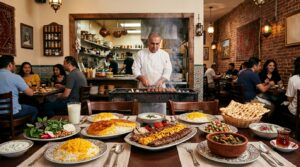



Persian food has a way of turning simple ingredients into something deeply satisfying. Fresh herbs, fragrant saffron, tender meat, beans, vegetables, dried fruits, nuts and rice come together in dishes that are comforting without feeling heavy.
At the heart of this cuisine are traditional Persian stews and rice dishes. Known for their balance of sweet, sour, savory and aromatic flavors, these dishes have been enjoyed across generations and remain an important part of Persian dining today.
Persian stews, commonly called khoresht, are usually slow-cooked and served with rice. Persian rice dishes, known as polo or polow, can be prepared with herbs, lentils, vegetables, meat, dried fruits or saffron. Then there is tahdig, the golden crispy rice at the bottom of the pot that many diners consider the best part of the meal.
At Hatam, traditional Persian cooking is at the center of the dining experience. The restaurant’s menu features dishes such as Ghormeh Sabzi, Gheimeh, Fesenjan, eggplant stew, Loobia Polo, Albalo Polo and Adas Polo.
Whether you are discovering Persian food for the first time or already have a favorite dish, understanding these classics makes the cuisine even more enjoyable.
What Are Traditional Persian Stews?
Traditional Persian stews are slow-cooked dishes made by combining meat, vegetables, herbs, beans, fruits, nuts and spices.
Unlike heavily spiced curries, many Persian stews focus on balance rather than heat. Ingredients such as dried lime, pomegranate, fresh herbs and walnuts give the dishes their distinctive flavors.
A typical Persian stew may include:
- Tender beef, lamb or chicken
- Fresh herbs or vegetables
- Beans or split peas
- Dried lime or pomegranate
- Onions and tomatoes
- Turmeric and other aromatic spices
The finished stew is generally served over or alongside fragrant Persian rice.
What Makes Persian Stew Recipes Unique?
The secret behind many Persian stew recipes is patience.
Ingredients are often cooked slowly so their flavors have time to develop. Meat becomes tender, herbs release their aroma and sauces become richer as they simmer.
Persian cooking also places a strong emphasis on flavor contrast.
You may find:
- Sour pomegranate with rich walnuts
- Tangy dried lime with tender meat
- Sweet dried fruit with savory rice
- Fresh herbs with earthy beans
- Saffron paired with fragrant basmati rice
This balance is one of the defining characteristics of traditional Persian cuisine.
7 Classic Persian Stews to Know
1. Ghormeh Sabzi
Ghormeh Sabzi is one of the most recognizable Persian stews and a dish that many people associate with Persian home cooking.
A traditional Persian herb stew recipe usually combines fresh herbs, kidney beans, meat and dried lime. Parsley, cilantro and fenugreek are commonly used to create the herb mixture.
- The dried lime adds a distinct sourness that gives the stew its signature flavor.
- The dish is generally served with Persian rice, allowing the flavorful sauce to soak into the grains.
- At Hatam, Ghormeh Sabzi is served as one of the restaurant’s traditional Persian specialties.
2. Fesenjan
Fesenjan offers a completely different flavor profile. This rich stew combines ground walnuts and pomegranate with chicken, creating a sauce that is nutty, tangy and slightly sweet.
It is an excellent example of how Persian cooking uses contrasting flavors in the same dish. A good walnut stew Persian recipe depends on finding the right balance between the richness of the walnuts and the acidity of the pomegranate.
Fesenjan is often served with white or saffron rice.
3. Gheimeh
Gheimeh is a comforting stew made with meat, split peas, tomato and dried lime. It is often finished with crispy fried potatoes, giving the dish a satisfying contrast in texture.
For anyone searching for a Persian split pea stew recipe, Gheimeh is one of the classic dishes worth trying. The tomato provides a savory base, while dried lime gives the stew a bright, tangy character.
4. Persian Eggplant Stew
Eggplant is an important ingredient in many Persian dishes. Persian eggplant stew recipes can vary, but the dish commonly combines eggplant with meat, tomato and a flavorful sauce.
Eggplant works particularly well in slow-cooked dishes because it absorbs the flavors of the surrounding ingredients. For vegetarian diners, eggplant can also be paired with tomatoes, herbs and other vegetables to create a satisfying meat-free version.
5. Persian Celery Stew
Celery stew, known as Khoresht-e Karafs, is another traditional Persian dish. It combines celery with herbs and meat, creating a stew that tastes fresh, savory and aromatic.
Mint and parsley are often used to add brightness to the dish. If you are exploring Persian celery stew recipes, this is a good example of how vegetables and herbs can become the main source of flavor in Persian cooking.
6. Persian Lamb Stew
Lamb appears in many traditional Persian meals. A Persian lamb stew recipe may combine tender lamb with herbs, vegetables, dried fruit or other aromatic ingredients.
Slow cooking helps the lamb become tender while allowing it to absorb the surrounding flavors. Lamb stews are especially well suited to Persian rice because the rich sauce pairs naturally with fluffy grains.
7. Chicken Stews
Persian chicken stew recipes offer another way to enjoy the cuisine without using beef or lamb. Chicken may be cooked with ingredients such as pomegranate, herbs, vegetables or dried fruit depending on the recipe.
Fesenjan, for example, is traditionally prepared with chicken and a walnut-pomegranate sauce. These dishes show that Persian cooking can create depth of flavor with different types of protein.
Why Is Rice So Important in Persian Cuisine?
Rice is one of the foundations of traditional Persian food. But Persian rice is prepared differently from simply boiling rice and serving it on the side. The grains are usually cooked to remain separate and fluffy, with saffron, butter or other ingredients adding aroma and flavor. Persian rice dishes can be simple or elaborate.
Popular varieties include:
- Saffron rice
- Adas Polo
- Loobia Polo
- Albalo Polo
- Zereshk Polo
- Sabzi Polo
- Tahdig
Each dish brings a different combination of flavors and textures to the table.
What is Tahdig?
Tahdig is the crispy layer that forms at the bottom of a Persian rice pot. It is golden, crunchy and highly prized. The word literally refers to the bottom of the pot, and achieving good tahdig requires careful cooking.
A Persian rice dish with crispy bottom creates a wonderful contrast between soft rice and crunchy golden grains.
Tahdig can be made with:
- Rice
- Potato slices
- Flatbread
For many people, getting a piece of tahdig with their meal is one of the highlights of eating Persian food.
Adas Polo: Persian Rice With Lentils
Adas Polo is a flavorful Persian lentil rice dish. Rice and lentils are combined with ingredients such as raisins, dates, onions and saffron, depending on the preparation.
The earthiness of lentils works beautifully with the sweetness of dried fruit. This makes Adas Polo different from many savory rice dishes because every bite can contain both sweet and savory notes.
It is a great choice for anyone looking for a Persian rice and lentil dish.
Loobia Polo: Rice, Green Beans and Meat
Loobia Polo is a Persian layered rice dish made with green beans, rice, meat and tomato. Instead of serving rice separately from a stew, the ingredients are combined during cooking. The result is a flavorful rice dish in which the grains absorb the taste of the tomato, meat and green beans.
Loobia Polo is one of the traditional dishes featured at Hatam.
Albalo Polo: Persian Sour Cherry Rice
Albalo Polo is known for its beautiful color and sweet-tart flavor. The dish combines rice with sour cherries and is often paired with meat. The cherries provide acidity and sweetness, creating a flavor profile that is very different from savory herb-based rice dishes.
It is a wonderful example of the Persian tradition of pairing fruit with savory ingredients.
Zereshk Polo: Rice With Barberries
Zereshk Polo combines fragrant rice with tart dried barberries. The bright red berries create a striking contrast against white and saffron-colored rice. The flavor is slightly sour, which makes it particularly enjoyable alongside rich chicken dishes.
For anyone exploring Persian rice dishes, Zereshk Polo is one of the classics worth knowing.
Persian Rice With Saffron
Saffron is one of the ingredients most closely associated with Persian cooking. Only a small amount is needed to give rice a beautiful golden color and delicate fragrance. In many preparations, saffron rice is placed over plain white rice rather than mixing saffron throughout the entire dish.
This creates a beautiful two-tone appearance while allowing the saffron to stand out. A Persian rice dish with saffron can be served alongside stews or as part of a larger Persian meal.
How Are Persian Stews and Rice Served Together?
One of the best things about Persian dining is how the dishes complement each other. A fragrant rice dish provides a light, fluffy base, while a stew adds sauce and concentrated flavor.
For example:
- Ghormeh Sabzi + Persian rice: Herbaceous, savory and tangy.
- Fesenjan + rice: Rich, nutty and sweet-tart.
- Gheimeh + rice: Savory, comforting and bright from dried lime.
- Eggplant stew + rice: Rich and deeply flavorful.
This combination is one reason rice and stew remain central to Persian meals.
Is Persian Food Spicy?
Persian food is generally not known for being extremely spicy.
Instead, traditional Persian cuisine relies on ingredients that build flavor gradually.
Common ingredients include:
- Saffron
- Turmeric
- Dried lime
- Cinnamon
- Fresh herbs
- Pomegranate
- Walnuts
- Dried fruits
The result is aromatic and flavorful without necessarily being hot. That makes Persian food dishes approachable for diners who enjoy complex flavors but do not want intense chili heat.
What Are the Healthier Elements of Persian Cuisine?
Persian meals can include a wide variety of nutritious ingredients.
- Fresh herbs, vegetables, beans, lentils, nuts and fruits all appear throughout the cuisine.
- Some dishes also provide a combination of protein and complex carbohydrates.
- For example, lentils in Adas Polo contribute plant-based protein and fiber, while herbs and vegetables add flavor and nutrients.
- Of course, individual dishes can vary considerably in ingredients and portion size, so it is best to consider the complete meal rather than labeling an entire cuisine as healthy or unhealthy.
How Can You Explore Persian Food for the First Time?
If you are new to Persian food, start with a few dishes that showcase different sides of the cuisine.
A simple introduction could include:
- Ghormeh Sabzi for herbs and dried lime
- Fesenjan for walnut and pomegranate flavors
- Gheimeh for split peas and crispy potatoes
- Adas Polo for lentils and fragrant rice
- Loobia Polo for green beans and seasoned rice
- Zereshk Polo for tart barberries
- Tahdig for crispy Persian rice
Trying several dishes together gives you a better sense of how Persian flavors work.
Experience Traditional Persian Food at Hatam
Persian food dishes are about much more than individual recipes. It is about balance, patience and bringing different flavors to the table.
Slow-cooked stews, fragrant rice, fresh herbs, saffron, dried fruits and nuts each have their own role. Together, they create meals that are comforting, colorful and deeply rooted in Persian culinary traditions.
At Hatam, this tradition is reflected in a menu that includes traditional Persian stews and rice dishes such as Ghormeh Sabzi, Gheimeh, Fesenjan, eggplant stew, Loobia Polo, Albalo Polo and Adas Polo.
Whether you are craving a hearty herb stew, a fragrant saffron rice dish or crispy tahdig, exploring Persian cuisine is an invitation to slow down and enjoy the meal.
And that may be one of the most enjoyable things about Persian food: there is always another combination of flavors waiting to be discovered.
Frequently Asked Questions
What are the most popular traditional Persian stews?
Summary: Popular Persian stews include Ghormeh Sabzi, Fesenjan, Gheimeh, eggplant stew, celery stew, and lamb or chicken stews.
Full answer: Some of the best-known traditional Persian stews include Ghormeh Sabzi, Fesenjan, Gheimeh, eggplant stew, celery stew and various lamb and chicken stews. They often combine meat or vegetables with herbs, beans, dried lime, pomegranate or other flavorful ingredients.
What is Ghormeh Sabzi made of?
Summary: Ghormeh Sabzi is commonly made with fresh herbs, kidney beans, meat, and dried lime.
Full answer: Ghormeh Sabzi is a Persian herb stew commonly prepared with fresh herbs, kidney beans, meat and dried lime. The herb mixture and dried lime give the dish its distinctive flavor.
What are the most popular Persian rice dishes?
Summary: Popular Persian rice dishes include Adas Polo, Loobia Polo, Albalo Polo, Zereshk Polo, saffron rice, and rice with tahdig.
Full answer: Popular Persian rice dishes include Adas Polo, Loobia Polo, Albalo Polo and Zereshk Polo. Saffron rice and rice with tahdig are also important parts of traditional Persian meals.
What is tahdig in Persian cuisine?
Summary: Tahdig is the crispy, golden layer that forms at the bottom of a Persian rice pot.
Full answer: Tahdig is the crispy layer that forms at the bottom of a Persian rice pot. It can be made from rice, potatoes or flatbread and is known for its golden color and crunchy texture.
Are Persian rice dishes always served with meat?
Summary: No. Persian rice dishes may include meat, vegetables, lentils, herbs, or dried fruits and can be served as a side or a complete meal.
Full answer: No. Persian rice dishes can contain meat, vegetables, lentils, herbs or dried fruits. Some are served alongside meat or stew, while others can be enjoyed as a complete meal.
Are traditional Persian stews spicy?
Summary: Most Persian stews are aromatic and flavorful rather than hot or chili-heavy.
Full answer: Most Persian stews are not particularly hot. Persian cooking generally emphasizes aromatic herbs, saffron, dried lime, pomegranate, nuts and spices rather than large amounts of chili.
What is the difference between Persian stew and curry?
Summary: Persian stews emphasize slow cooking and balanced sweet, sour, and savory flavors rather than South Asian curry spice blends.
Full answer: Persian stews generally focus on slow cooking and balanced sweet, sour and savory flavors. They are not necessarily based on the spice blends or preparation methods commonly associated with South Asian curries.
Where can I try traditional Persian stews and rice dishes?
Summary: Hatam in Mission Viejo offers traditional Persian stews and rice dishes and has served Orange County for decades.
Full answer: Hatam in Mission Viejo, Orange County, offers traditional Persian cuisine including Ghormeh Sabzi, Gheimeh, Fesenjan, eggplant stew, Loobia Polo, Albalo Polo and Adas Polo. The restaurant has been serving Persian food in Orange County for decades.